

A Christmas Carol
The Holiday Classic Story and Its Adaptations
Few Christmas stories endure through the centuries with little change. Sure, today there’s an absolute deluge of different Christmas movies that come out every year – most of which are saccharine, sweet, and sickly syrupy in the message of the holidays – but there really aren’t that many that could be considered classics.
In fact, there’s something that has to have a special quality to make it a classic. Think of Home Alone, the Rankin-Bass specials, Charlie Brown Christmas, and other holiday movies that are considered must-watches.
At the top of them is “A Christmas Carol“, a story first written in 1843 by Charles Dickens that has remained a popular classic ever since. Hell, most people who don’t even pick up books or read Charles Dickens know of “A Christmas Carol” and its tropes, and probably know the story by heart. It’s so ingrained in our culture that calling someone a “Scrooge” means someone is tight-fisted and full of dour humbuggery.
But it makes sense why it’s popular. At its core, it’s about the spirit of the holiday season. About a man who walled himself off from forming close connections with his fellow man because of past hurts, and who, in turn, hurts others through carelessness and possibly even malice. About said man’s redemption into realizing that by hurting others, he hurts himself. About reconnection with the spark of humanity, we all feel on Christmas, we spend our time among loved ones. About charity, giving, and experiencing the joys with one another.
And of course Ghosts. What most people forget is that “A Christmas Carol” is a ghost story entirely predicated on Ebenezer Scrooge (our protagonist for those who didn’t know) being haunted, and the threat of his eternal soul suffering in damnation after his death, as well as how celebrated said death would be if he didn’t change his ways.
And it’s that aspect I wanted to write about for Lefthand Path Press. I wanted to discuss different versions of the story that I felt horror fans, and those who love indulging in darker, more macabre media, could enjoy.
So you might be asking yourself what the criteria are for choosing which “A Christmas Carol” adaptation to pick. It’s a hard decision because there are, unsurprisingly, over 900 variations of the classic story, ranging from filmed stage productions, movies, television shows, cartoons, musicals, retellings, and more. All of them range from pleasant, light-hearted, and fun to darker tones evocative of the Victorian era Dickens lived in.
It’s the latter ones that I’ve chosen, more or less. As I stated earlier, “A Christmas Carol” is a ghost story and involves many elements of the paranormal and supernatural. That still doesn’t make it a horror-themed story, but to be honest, I’m not too interested in exploring outright horror content for Christmas. Most holiday horror just evokes the tropes of Christmas rather than explores them thematically, and while there are possible scares, I actually prefer to keep the holiday peaceful and pleasant. It’s one of the few holidays I feel I can relax on (ignoring all of the blatant commercializations, of course).
I digress! Let us get into what I feel are the better versions of this classic Christmas story.

“A Christmas Carol” starring Alistair Sims, 1951
This is probably the version that most people think of when they think of a top 10 list of “A Christmas Carol” adaptations, and honestly, it’s deserving of its spot. While it’s not the first film adaptation to grace the silver screen (there is a 1910 version that survived, directed by J. Searle Dawley and starring Marc McDermott as Scrooge), it is one that became a classic during its time and remains so now.
Out of every Scrooge on the following list, Alistair Sims is perhaps the closest in body shape to what we think of with Ebenezer Scrooge. However, Scrooge is often depicted with a serious, sour expression characterized by sharpened, almost beady eyes and a scowl as cold as ice.
By contrast, Sims comes across as more genial. Sure, he’s a small, angry man, but he’s also prone to more histrionics in this adaptation that makes it feel as if Scrooge is more gesticulative and fluctuative in his mood swings rather than just starting off as cruel and harsh, then to dismissive and uncertain, and then to softened and introspective. Here, he moves wildly, with loud body language a lot of the time.
That’s a product of its time, though, when films of that era pulled their actors from the theater, and Alistair Sims was a stage actor first before a film actor. Historically, it makes sense that his training and expertise were in expressive body language to convey emotion, as well as in the power of his voice, but it might still feel strange for those who don’t understand the historical context.
What this adaptation of the story excels at, though, is the darkness, shadows, and overall atmosphere of the world in which Scrooge and the other characters inhabit. That’s mainly because it’s in black and white, though full-color versions of the film do exist (and, personally, the black-and-white version is superior, though you might disagree). The shadows and such lend themselves to a darker, grittier world that’s closer to the reality of what Londo was like in the 19th century.
Plus, what I particularly like about this version is that it shows how Scrooge had backstabbed his former employer, Fezziwig. In most adaptations, Fezziwig serves as a background character, meant to showcase that Scrooge in his youth didn’t care about money and wanted to focus on happiness until he lost the love of his life and became a miserly, bitter man. This shows how, at first, Scrooge accepted Fezziwig’s generosity, but later, as he grew older and focused more on accumulating wealth, he turned Fezziwig’s generosity against him purely for profit.
Cold, and showcases how ruthless in business Scrooge could be, and it works. A shame other adaptations never built off this moment, but I digress.

“A Christmas Carol” starring George C. Scott, 1984
This is perhaps my favorite version of the story, simply because I feel it is more ‘complete’, and in tune with the original novella. While George C. Scott doesn’t look like he’d make for a good Ebenezer Scrooge, given he’s a pretty big man and Scrooge is often depicted as rail-thin and miserly, his deep, reverberating growls and punctuated, violent movements make him seem like a more dangerous, brutal version of Scrooge rather than just a skinflint whom one owes money to.
Out of all the versions on this list, this one is the most colorful and vibrant (surprisingly, even compared to the Muppets adaptation), but make no mistake in thinking that it’s a cheery affair from start to end. In fact, it’s pretty dark in a lot of places, especially in the third act before Scrooge’s redemption.
What I like about this version is that it feels like a Victorian-era ghost story. You know the type; not quite gothic, but with an air of mystery that seems not adhere to any rhyme or reason. Ghosts show up, they haunt the target as a spectre ever present, and only appear when they need to move the story forward or provide some measure of chills. It’s not particularly menacing, and there’s no real sense of dread that permeates the film, but the payoff at the end feels the most earned considering all that Scrooge has to go through to get there.
Plus, I absolutely love this version of Ghost of Christmas Present. Edward Woodward does a phenomenal job as the spectre; jovial, light-hearted, and fun as the spirit of the holiday is supposed to be, but will absolutely admonish and even mock Scrooge for his past actions and words. It also includes my favorite scene, which features “Want” and “Ignorance,” because it’s not heavily stylized. The children are simply there, miserable the entire time, and it succinctly conveys Dickens’ message without making it too much of a spectacle. I also like this version of Scrooge’s Nephew, Fred, the most, but that’s only because Roger Rees is so charming and earnest in his desire to be a part of Scrooge’s life, and genuinely comes across as happy in the end when Scrooge realizes that he had been neglecting his beloved sister’s legacy.
Plus, the last third act is perhaps my favorite of the bunch as well. I know I’m just repeating how well I like this film, but it’s been a holiday staple of mine for nigh fifteen years ever since I first saw it aired on television and my Father – a film buff in his own right – insisted on buying a copy of the film on VHS, and then DVD, to make it a yearly staple on Christmas Eve.
Of all the versions of the story on this list, I really implore you to watch it if you haven’t yet.

“A Christmas Carol” 2020
This one feels very experimental but kind of works in an odd way. This one is certainly a version to watch if you’re very familiar with the story, have read the novella, or want a different interpretation of the classic story.
So why is it included on this list? For starters, it’s not exactly an overtly cheerful, upbeat version as you’d find with a lot of other retellings. In fact, it’s dark, almost melancholy in a lot of ways, and very much feels like a Victorian-era-inspired film given the set and costume designs.
While it has that gothic feeling that almost touches on a smidge of horror, it pulls back because it’s a film set to dancing, almost like a ballet or a stage production, but done as a theatrical film. It works in the sense that all of the hallmarks of “A Christmas Carol” are there from start to finish, broken up occasionally with dances and more.
Keep in mind, though, that this film does diverge from some of the messages we typically attribute to it, but it is still very much in line with what Charles Dickens, as a person, usually championed. While the Novella was tongue-in-cheek regarding worker rights, the plight of the poor, and how the season and holiday are a good opportunity to uplift those with lesser means in the spirit of humanity, it wasn’t exactly direct.
By contrast, this film puts that more up front than in other films where the focus is on Scrooge’s redemption. Make no mistake: the redemption is there, but the film’s true message is directed towards the downtrodden in London’s underbelly.
Plus, Michael Nunn and Simon Russel Baele did fairly well as Ebenezer Scrooge. I’d highly recommend this one if you want something a little different this holiday season, and to watch something that’s a bit dour. However, it does not really hold a candle to something “different” than the next entry.
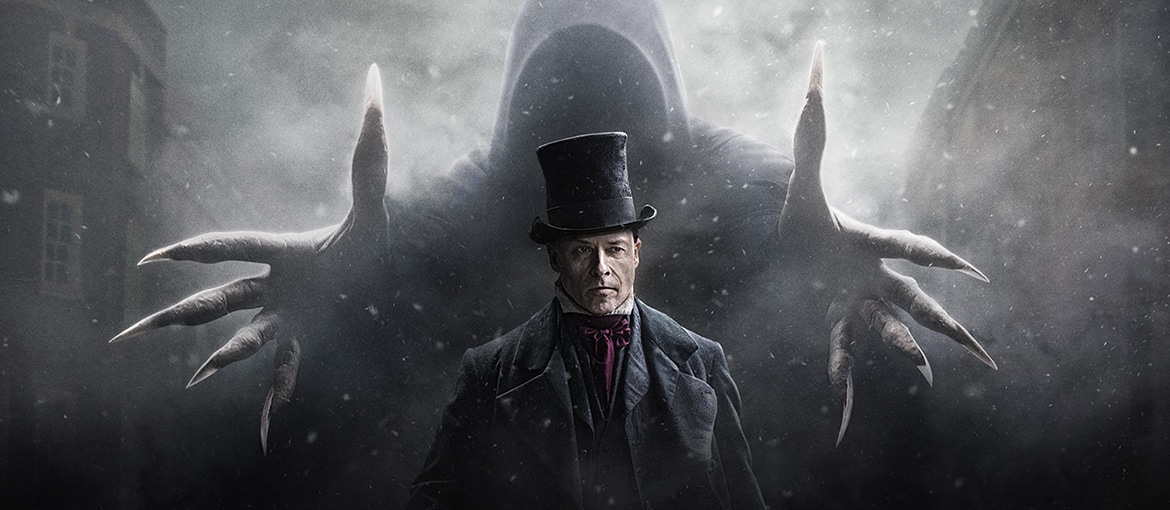
“A Christmas Carol” BBC Television Show, 2019
While the BBC had produced my favorite version of “A Christmas Carol” back in 1984, it has also produced maybe one of the most ambitiously different versions of the seminal classic that I’ve ever seen.
What differentiates this version from the previous entries on the list is that it’s… well, far different. The other versions aren’t quite gothic or fantasy, despite the supernatural elements, as I explained, so they’ve been wholly outside the realm of horror, even though it is a holiday ghost story. This, by contrast, is a far darker, more fantastical version, spread over three episodes, for a total runtime of around 3 hours.
Everything is there. Jacob Marley, the Ghosts, Bob Cratchitt, Want, Need, and everything else. However, this show is not only tonally bleak but also delves into parts of the story that weren’t in the original novella and that no other production has really explored.
As an example, it goes into the background of how Jacob Marley even rose from the grave to seek out Scrooge and set in motion his path to redemption in the first place. In the original version of the story, it’s implied that Jacob, even after Scrooge’s redemption, will wander the world forever as a shade, unable to pass on into the afterlife. In this, Scrooge’s redemption is tied to Marley’s, who has passed on into a sort of purgatory where the spirits of those who died under his watch torment him. In fact, it was a blacksmith that worked himself to death who forged Marley’s (and, in turn, Scrooge’s) chain, with each link representing a moment of greed that led to someone’s death.
That’s all the spoilers you’ll get, though. Consider it a freebie to entice you to pick it up.
But what I enjoyed about this one is that it holds no punches. Guy Pearce plays a more neurotic Scrooge, constantly lost in his own head, haunted by his negative emotions. In other versions of the story, Scrooge comes off as simply uncaring about everything around him. In fact, it even kind of feels like he enjoys being a miserly jerk because it gives him a sense of power and control that he hadn’t had when he was an apprentice to Fezziwig, when the love of his life walked away, when his Father didn’t love him, and he lost his Sister early in childbirth. Through his uncaring attitude, it always came across as a shield, and only when he realizes that it doesn’t actually give him strength but walls him off from humanity does he lower his guard and allow himself to be part of the world.
Here, though, all those negative traits come back in force to drive him mad and insane and the act of redemption through Marley and the ghosts is less to remind him of the power of community and humanity, but to pull him from his own self-imposed darkness back to the light.
And honestly? I’m here for it.
Plus, what I enjoy about this version is that many of the wrongs Scrooge commits are front and center. Yes we know Scrooge is a money lender and is tight fisted about payment, but we rarely see it outside of a few characters to establish how horrible he initially is, and the poor are mostly to punctuate Scrooge’s attitude towards them in the story (“Are there no Prisons? No Poorhouses? Better to die and decrease the surplus population!” is a classic line).
Overall, for this version, if you’re into a darker, more fantastically gothic take on the tale and want to be thrown for a loop with some new ideas into the usual mythos, then I think you’ll quite enjoy this one and should check it out.

“A Muppets Christmas Carol” starring the Muppets, 1992
Here me out with this! I know, technically, that this version is far from down, dreary, and gothic, and that it leans more toward the comedic aspects of the Muppets and the original story, but I wanted to include it because it is a good version of the story and serves as a palate cleanser.
And that last part is mainly why I added it. This holiday is supposed to be warm, comfortable, and full of good cheer towards one another and comfortable memories. What the Muppets do well is be funny and… well… if you’ve watched the previous versions, might as well get one that’ll leave you grinning ear to ear at least, right?
Plus, Michael Caine is great as Ebenezer Scrooge. While he’s sort of like George C. Scott in that he doesn’t really fit the idea of what Scrooge should be, since he, too, is a rather large man, he is a great actor. Plus, he treats the role with gravitas and acts as if the Muppets are fellow actors, thus giving them the respect they deserve.
While some parts of the story had been shaved down in the name of spectacle – such as the ending segment where Scrooge goes to all those he has wronged one by one to ask for forgiveness, partake in the holidays, and then the day after Christmas change Bob Cratchitt’s fortunes all for a feel good ending with Tiny Tim – it is still a nice catharsis after all that we had watched Scrooge endure.
Final Words
In the end, it’s all going to depend on what sort of mood you want to go with, and this is by far an incomplete list. As I said earlier, there are over 900 different adaptations of the classic story you could sink your teeth into, and there might even be an adaptation that you prefer over every other.
What this list does, though, is at least give you a starting point, of sorts, and points out several adaptations that are darker and closer to gothic than others. While the Muppets one is pure fun and comedy meant for younger audiences, the others are more serious and foreboding, full of atmosphere and tension all the way to the end.
Still, Merry Christmas to those who want to sit cozily close to a fire, sip hot chocolate, and watch something that’s not saccharine and overly sentimental while still getting into the spirit of the holiday. When it comes to Christmas, memories, traditions, family, and charity toward fellow humans matter most, and “A Christmas Carol” encapsulates what makes this holiday so special.
Merry Christmas, and Happy Holidays!
